In the past, “sustainability” in the hotel industry often meant asking guests to reuse their towels. Today, in Kenya’s premium market, sustainability has become the ultimate status symbol. From the savannahs of Tsavo to the rooftops of Westlands, high-end hotels are proving that environmental responsibility and five-star comfort are not mutually exclusive—they are inseparable.
Off-Grid and Opulent
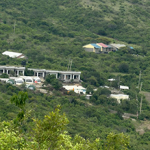
One of the most compelling case studies is Kilaguni Serena Safari Lodge in Tsavo West National Park. As Kenya’s first permanent lodge inside a national park, it carries a heavy responsibility to the ecosystem. In 2017, it became Kenya’s first fully solar-powered lodge, utilizing a 307kWp off-grid solar PV plant that has since avoided over 2,233 tons of carbon emissions .
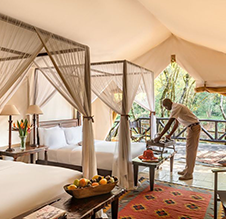
For the guest, this translates to a superior experience: the silence of the wild is no longer interrupted by the hum of diesel generators. Low-flow showers, refillable amenities, and glass-bottled water ensure that the luxury experience enhances, rather than degrades, the surrounding wilderness .
Urban Innovation
This green revolution isn’t limited to safari lodges. In the heart of Nairobi’s Westlands, ibis Styles Nairobi recently unveiled “The Green Room,” a venue powered entirely by renewable energy sourced from 296 rooftop solar panels .
According to General Manager Thomas Simonnet, this move aligns with Accor’s global commitment to responsible tourism while elevating the guest experience. It demonstrates that even in an urban setting, sustainability can be woven into the design of social spaces, from cocktail bars to rooftop entertainment venues .
Tech-Driven Efficiency
Behind the scenes, technology is driving this shift. IT Directors like Angela Gichuki of Hemingways Hospitality are implementing data-driven tools to track energy consumption and waste management .
“The goal is not to replace human interaction,” Gichuki notes, “It is to give our teams more time to deliver meaningful guest experiences” . By automating energy grids and water recycling, staff are freed up to focus on high-touch service, while the hotel reduces its carbon footprint and operational costs.
Conclusion
Kenya is positioning itself as Africa’s top recipient of tourism Foreign Direct Investment (FDI) . As international investors pour in, the expectation is clear: premium Kenyan hotels must be built for the future. Whether it’s the Sh1 million Presidential Suite or a boutique resort in Malindi, the future of premium service in Kenya is undeniably green, quiet, and hyper-personalized.